Yes, it’s a trick question—they are the same thing in the dental kingdom. But most people are confused about the what, when, how and whys of a crown, so here’s the Reader’s Digest version.
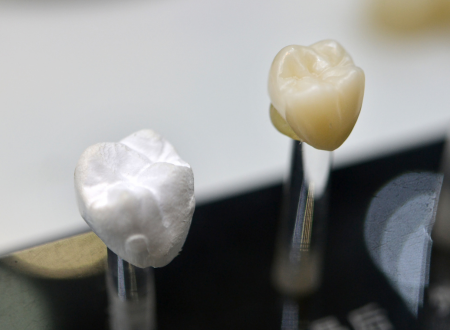
A crown is a laboratory-fabricated custom restoration that completely covers the remaining tooth above the gumline. It can be either tooth-colored (i.e. porcelain) or all- metal, depending on individual circumstances and preferences. It usually takes a dental lab 2-3 weeks to make, depending on difficulty, and two visits in the dental office if all goes well.
A crown is required when the remaining tooth is insufficient to support a regular filling or has a problematic crack in the tooth, or has recently had the nerve tissue removed (root canal). A root canal is not required before crowning a tooth if the nerve responds normally to basic vitality tests. That does not, however, mean that a tooth might not need a root canal sometime after a crown is placed. Usually a crowned tooth has been subjected to a lot of trauma from previous decay and restoration and the nerve is more likely to fail in the future. The good news is that the root canal can be done through a crown and then repaired without significantly compromising the crown.
If you take care of a crown—brushing, flossing, regular cleanings—it can last a lifetime. Sometimes the porcelain can fracture on a tooth-colored crown and might require repair or replacement. Sometimes you can get decay around the edge of a crown, where the crown meets the tooth, and the crown will need to be replaced. Both of these problems are fairly rare if you are conscientious about care of your teeth. Sometimes a crown can come off, but if it was done properly it can usually be recemented and expected to function as well as before.
If your dentist is recommending a crown and you do not understand why you need one, you should get a second opinion. We are happy to help. If you’d like to schedule a consultation, please give us a call at 630.420.0013.